
Most building materials are designed to look their best on the day of installation. They begin to decline shortly after — finishes that scratch, joinery that sags, surfaces that lose their lustre under daily use. A small group of materials behave differently. They begin life looking serviceable and become more beautiful with time. These are the materials we specify wherever the budget allows, because the entire premise of building for the long view rests on them.
Natural stone
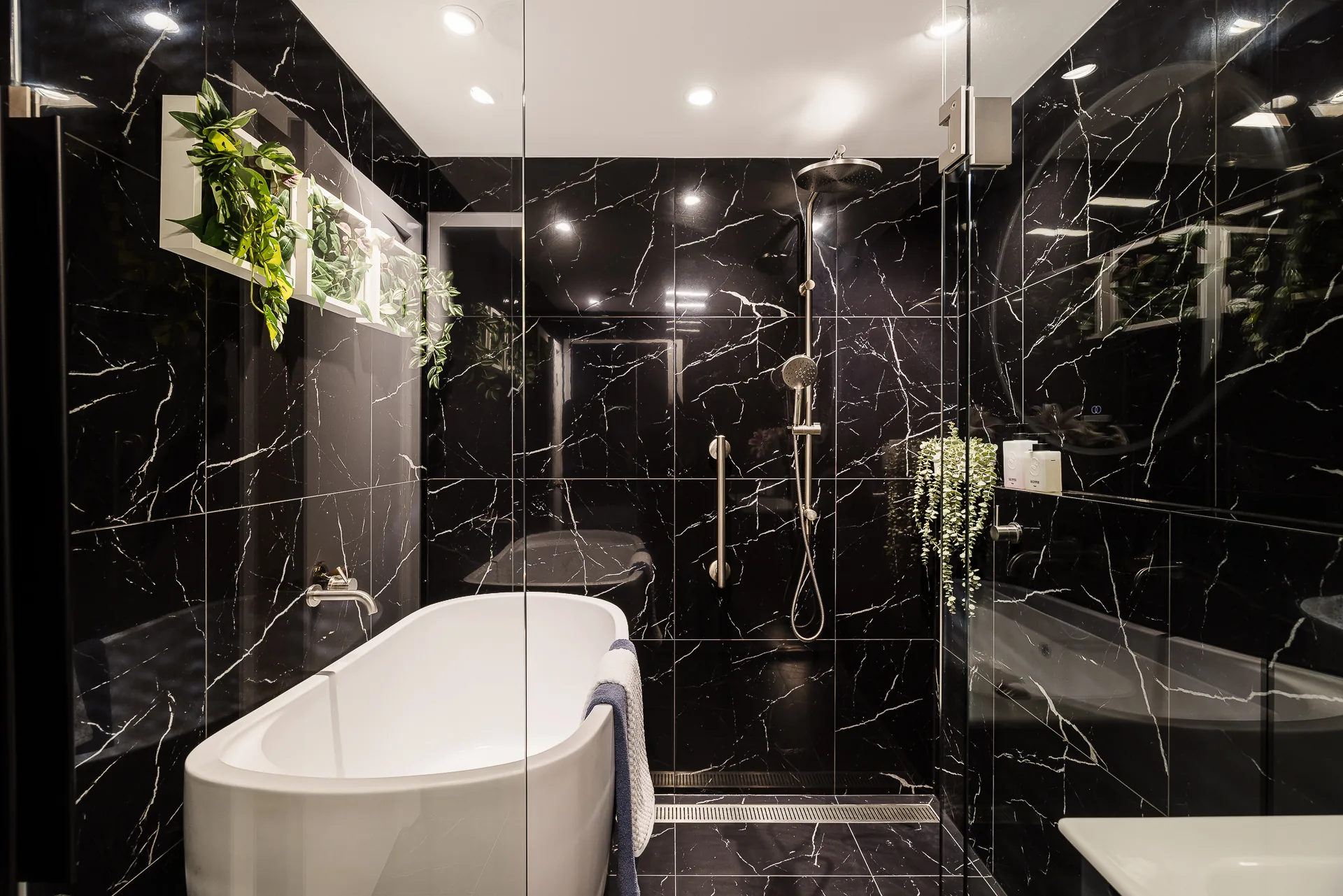
Marble, travertine, limestone — these surfaces develop what conservators call patina: a softness on the corners, a shift in tone where hands rest most often. A polished marble benchtop in a working kitchen will, after five years, no longer look like a showroom. It will look like itself, lived in. The owners who understand this love their stone more each year. The owners who don't replace it, and learn the lesson the expensive way.
Solid timber
There is no comparison between solid timber and timber veneer over the long term. Veneer chips at the edges; solid timber can be sanded and refinished decades later. Quartersawn oak, blackbutt, hoop pine — these timbers have been used in Australian homes for a hundred years for the same reason we still specify them: they last as long as the building does, and they age into something more honest than they began.
Aged metal
Brass and copper, left unlacquered, oxidise on a timeline of years. The first six months they look uneven. The first two years they develop character. After five, they have settled into a finish no factory can replicate. Stainless steel, by contrast, is engineered to look unchanged forever, and never quite achieves it. We use solid brass in tapware, hardware, and trim wherever the client is willing to let it age. Most are, once they understand what aging means.
Lime wash and natural plaster
Painted walls fade evenly and look tired. Lime-washed walls develop subtle variation as the lime carbonates and the surface moves with humidity. The plaster finishes used in older Melbourne homes — Venetian, marmorino, tadelakt — gain depth as they cure, sometimes for years. They are more expensive to apply and they reward the expense by aging into the room rather than against it.
Polished concrete
A properly poured and ground concrete slab — not a topping, not an overlay — accepts use and shows it without complaint. Furniture marks become part of the floor. Spills, eventually, leave traces. This is not for everyone, but for those who want a floor that records the life lived on it, nothing else does the job as well.
What we tend to avoid
The materials that age poorly are usually the ones marketed on appearance alone. Engineered stone with resin binders. MDF cabinetry under thin veneer. Acrylic-coated timber floors. PVC-clad doors. None of these are intrinsically wrong — they have their place, often a good one — but they are not the materials of a building meant to last decades. We tell clients honestly when a budget pushes us toward one of these, and we tell them what they are trading for the saving.
Why this matters
A renovation that ages well costs more upfront and less over time. Materials that improve with use do not need replacing every fifteen years. The carbon, the labour, and the inconvenience of renovating again are all avoided. A long-view material specification is, in the end, both the more beautiful and the more economical decision — but only if you stay in the home long enough to see it through.
How Atelier approaches it
Our design conversations begin with a question we ask early: how long do you intend to stay in this home? The answer changes everything. For a five-year holding, we make different recommendations than for a forty-year one. For most of our clients, who are renovating because they intend to stay, we specify materials that will be more themselves in two decades than they are on handover day.
If you are planning a renovation in Melbourne and would like to discuss a long-view material specification, we would be glad to hear from you.
Ready to Begin?
Share your brief and Rodney will be in contact within one working day.
Begin Enquiry